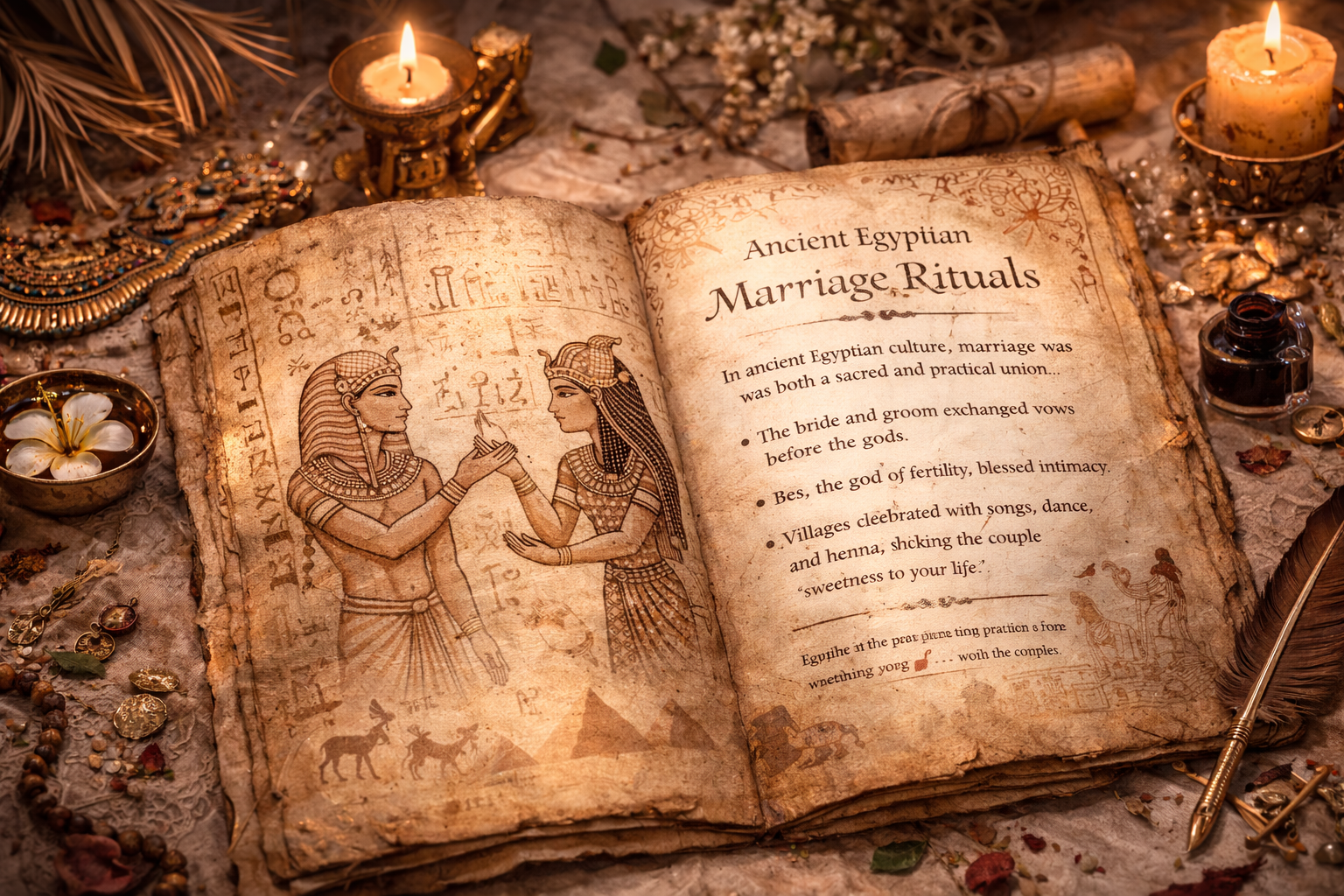
In ancient Egypt, marriage was less about ceremony and more about sacred partnership. There were no formal weddings as we know them today; instead, a union was recognized when a couple chose to live together and share their lives. This simplicity reflected a deeper belief that love, loyalty, and mutual respect were the true foundations of a lasting bond.
Rituals often unfolded within the home, where offerings, shared meals, and symbolic adornments marked the beginning of a life together. Jewelry, oils, and fragrances were not merely decorative, but expressions of devotion and care. Intimacy was viewed as a natural and honored part of union, tied closely to fertility, harmony, and emotional connection.
Rather than performance or spectacle, ancient Egyptian love emphasized presence, partnership, and the quiet understanding between two people choosing one another—daily, intentionally, and without excess.
In ancient Egypt, marriage was less about ceremony and more about sacred partnership. There were no formal weddings as we know them today; instead, a union was recognized when a couple chose to live together and share their lives. This simplicity reflected a deeper belief that love, loyalty, and mutual respect were the true foundations of a lasting bond.
Rituals often unfolded within the home, where offerings, shared meals, and symbolic adornments marked the beginning of a life together. Jewelry, oils, and fragrances were not merely decorative, but expressions of devotion and care. Intimacy was viewed as a natural and honored part of union, tied closely to fertility, harmony, and emotional connection.
Rather than performance or spectacle, ancient Egyptian love emphasized presence, partnership, and the quiet understanding between two people choosing one another—daily, intentionally, and without excess.