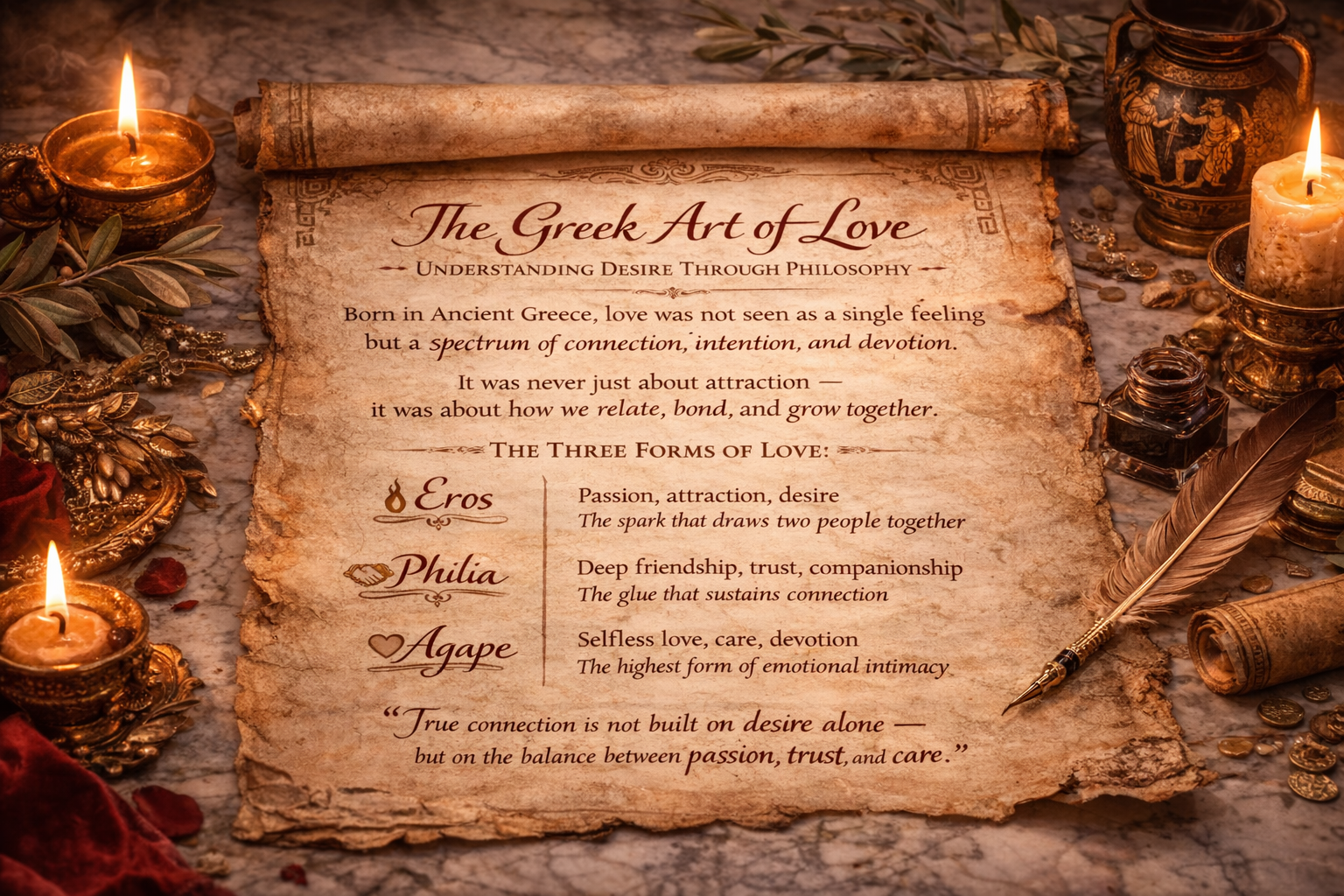
🔥 The Art of Desire.
Understanding Desire Through Philosophy
Born in Ancient Greece, love was not seen as a single feeling
but a spectrum of connection, intention, and devotion.
It was never just about attraction —
it was about how we relate, bond, and grow together.
The Three Forms of Love:
Eros 🔥
Passion, attraction, desire
The spark that draws two people together
Philia 🤝
Deep friendship, trust, companionship
The glue that sustains connection
Agape 🤍
Selfless love, care, devotion
The highest form of emotional intimacy
“True connection is not built on desire alone —
but on the balance between passion, trust, and care.”The Greek Art of Love
In ancient Egypt, marriage was less about ceremony and more about sacred partnership. There were no formal weddings as we know them today; instead, a union was recognized when a couple chose to live together and share their lives. This simplicity reflected a deeper belief that love, loyalty, and mutual respect were the true foundations of a lasting bond.
Rituals often unfolded within the home, where offerings, shared meals, and symbolic adornments marked the beginning of a life together. Jewelry, oils, and fragrances were not merely decorative, but expressions of devotion and care. Intimacy was viewed as a natural and honored part of union, tied closely to fertility, harmony, and emotional connection.
Rather than performance or spectacle, ancient Egyptian love emphasized presence, partnership, and the quiet understanding between two people choosing one another—daily, intentionally, and without excess.
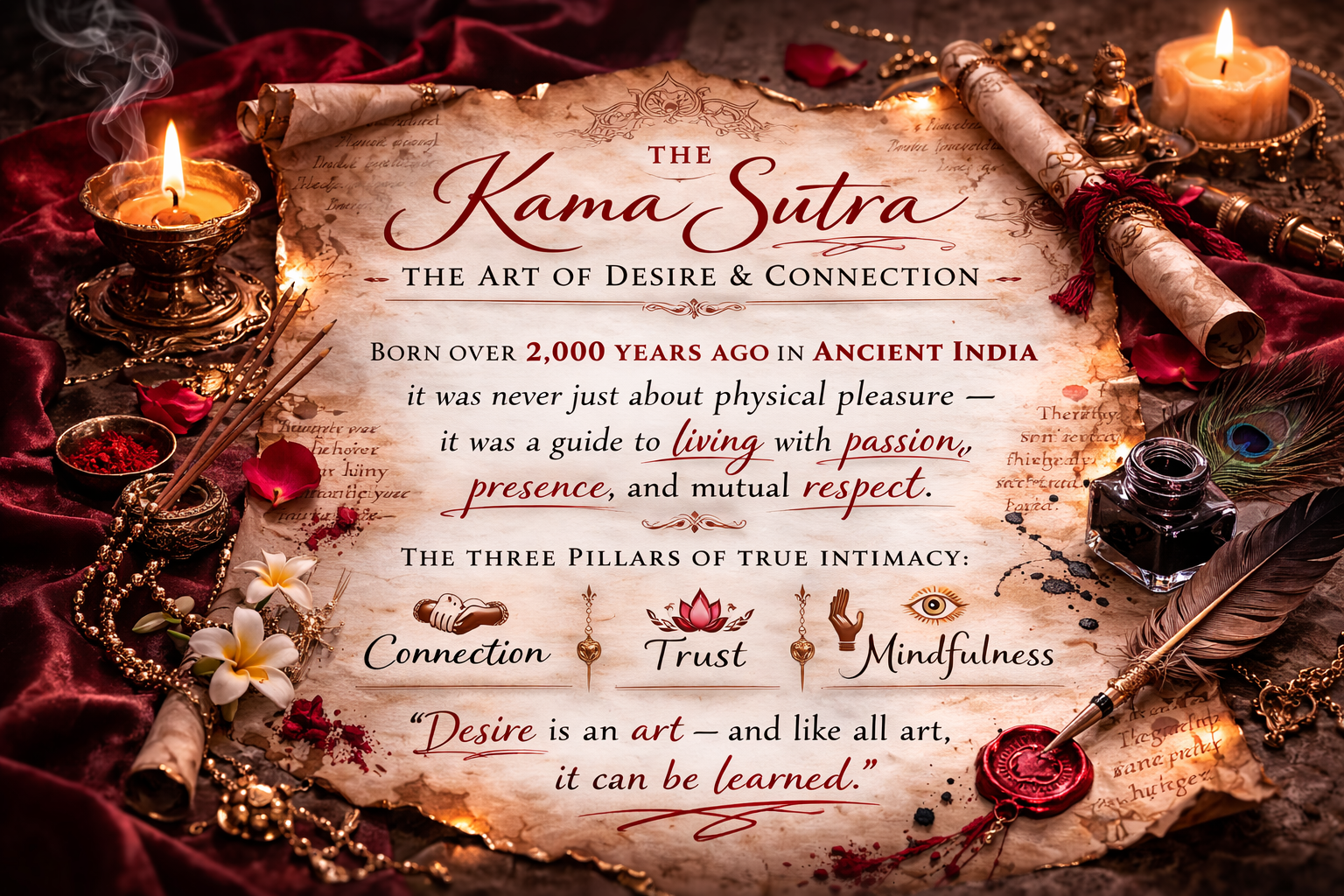
The Kama Sutra is often misunderstood as a simple guide to physical positions, yet its true origins tell a far richer story. Written in ancient India by the philosopher Vātsyāyana, it was never intended as a manual of performance, but as a study of how to live well, love deeply, and connect with intention.
At its core, the text explores the balance between desire, respect, and emotional awareness. It teaches that intimacy is not separate from daily life, but woven into how we communicate, how we build trust, and how we understand one another. Physical connection is only one expression of a much broader philosophy rooted in presence and mutual care.
The Kama Sutra reminds us that desire is not something to rush or control, but something to understand. When approached with awareness, it becomes less about action and more about connection—an art shaped by patience, curiosity, and the willingness to truly see another person.The Kama Sutra: Where Desire Becomes Art